CNC machining materials for your next machine component
Choose a material for the part’s job, then define the grade, condition and finish. Great Machining produces custom machined components from your drawings for prototypes, small batches and repeat orders.
Start with aluminum, stainless steel, steel or brass below. If the material is undecided, send the drawing and intended use so we can discuss manufacturing options with your quotation.
Explore materials for machined parts
These are starting options for a project quotation. The specified grade, stock form and condition are confirmed for the order; a material family name alone is not a purchase specification.
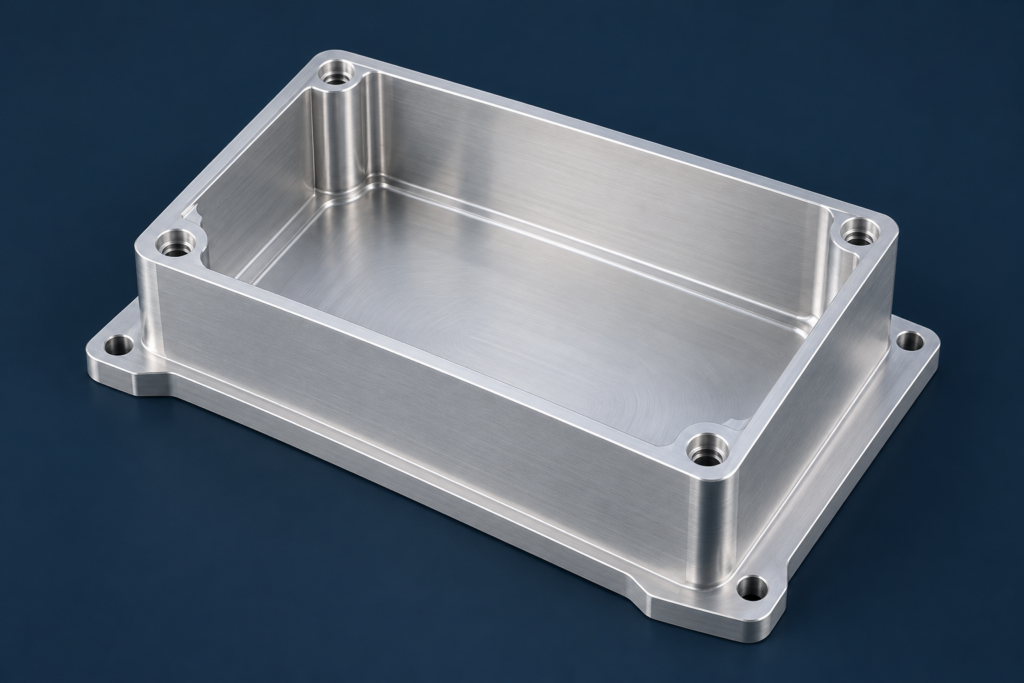
Aluminum — housings, brackets and mounting plates
Consider aluminum plate or bar for a housing or bracket with a weight target; check the section and allowable movement before choosing the alloy.
Specify the material standard, grade, temper and stock form. 6061-T6 and 6082-T6 are separate choices; 7075-T6 is a further option when strength requirements call for it.
Share the load, anodized appearance and critical fit requirements. Do not substitute an alloy or temper simply because the overall dimensions match.
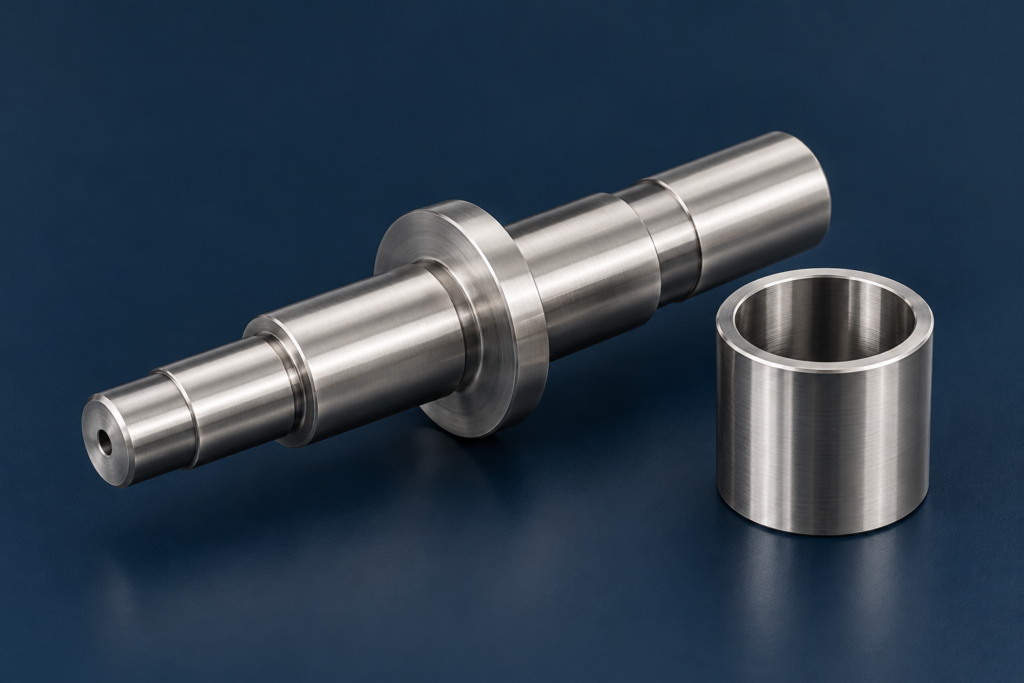
Stainless steel — shafts, sleeves and exposed components
Consider stainless steel for a shaft, sleeve or component exposed to moisture or cleaning media, then select the grade for the actual exposure and joining requirements.
303 bar, 304 or 316L bar and plate, and 17-4PH with a specified heat-treatment condition are distinct stainless options.
Confirm the stock form and machining route. Do not substitute 303 for 304 or 316L without approval.
Include the contact media and operating temperature in the inquiry. For 17-4PH, define the required condition and whether dimensions are accepted after heat treatment.
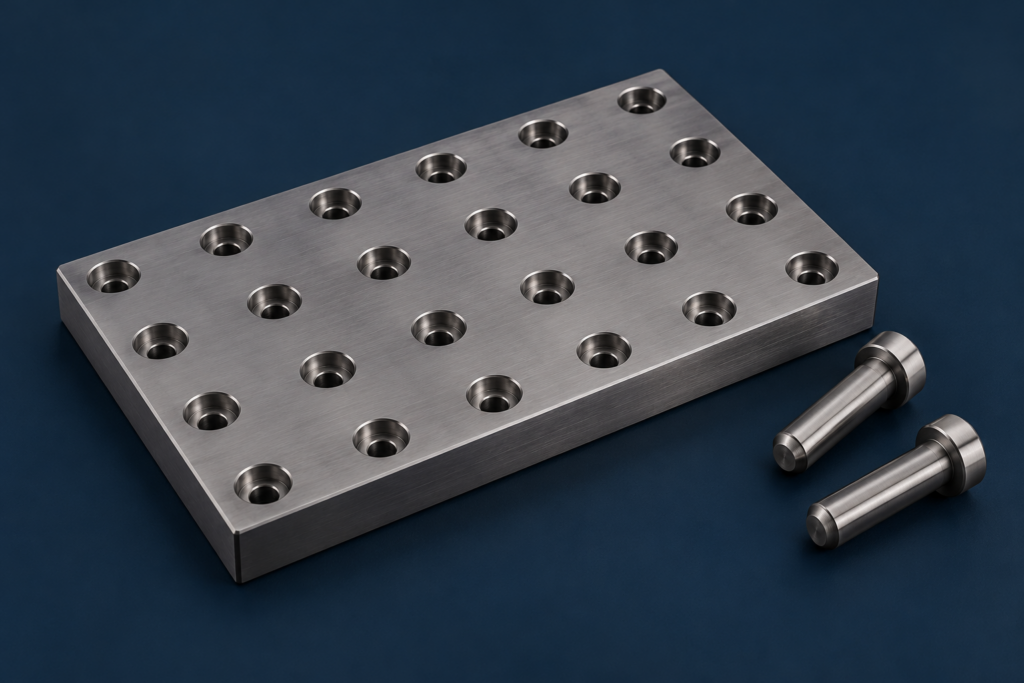
Steel — fixtures, locating parts and loaded components
Consider the steel options for a fixture, support or pin when hardness, wear faces or heat-treatment condition drives the design.
For 1018, 1045 and 4140, define the material standard, hardness or heat-treatment condition and corrosion protection. P20 and H13 are tooling options with their own hardness and final-operation requirements.
Identify fitted features and any dimensions that must be finished after treatment.
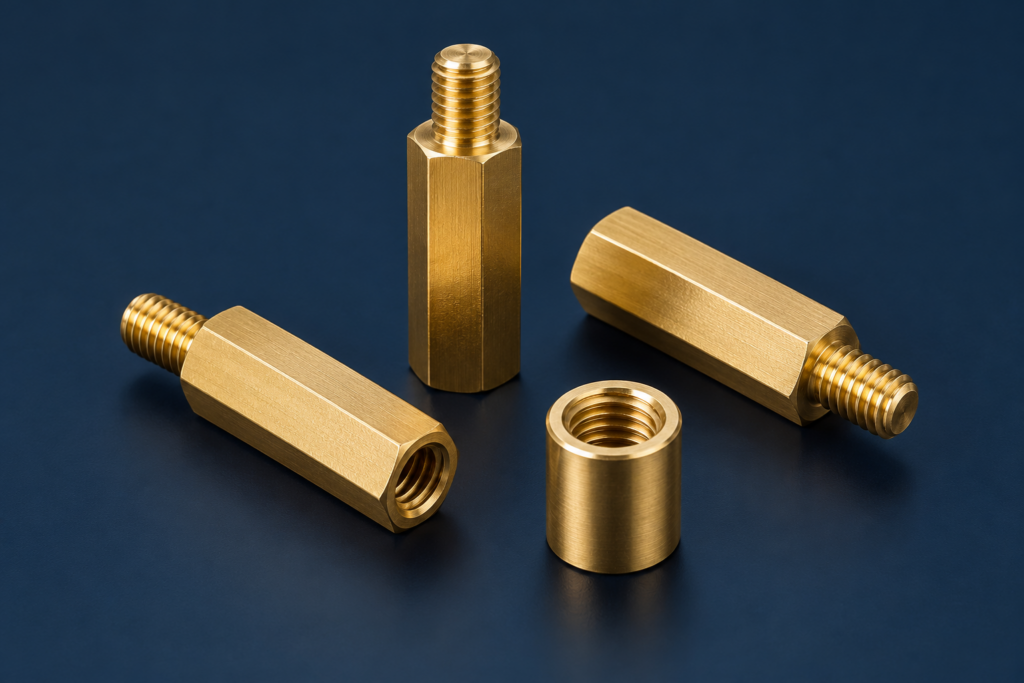
Brass — fittings, spacers and threaded components
C36000 brass bar suits machined fittings, sleeves and threaded parts; specify the alloy and any lead-content, media or compliance requirements.
C36000 is a free-cutting brass, not a lead-free material. Tell us if the application requires a different alloy or supporting material documents.
For round parts, define thread standard, sealing faces, bore fit and burr requirements as well as the alloy. These details help establish the turning and finishing route.
Part images are AI-generated illustrations of component forms. They do not identify a supplied grade, current stock or customer project.
Compare requirements before comparing grades
A useful CNC machining material selection starts with the feature or operating condition that limits the design. Use the same drawing and quantity when comparing alternatives.
Considering POM for a sliding or locating part?
POM-C and POM-H can be assessed for sliding, contact and locating parts. Confirm the actual stock grade, operating conditions and measurement state for the drawing.
For POM parts, material grade, heat during machining and workholding can affect the final dimensions. Agree the inspection temperature and condition for critical fits.
Send the expected load, temperature, mating surface and service conditions. We will review the proposed plastic component as a project option; its fit and function need to be assessed for the intended application.
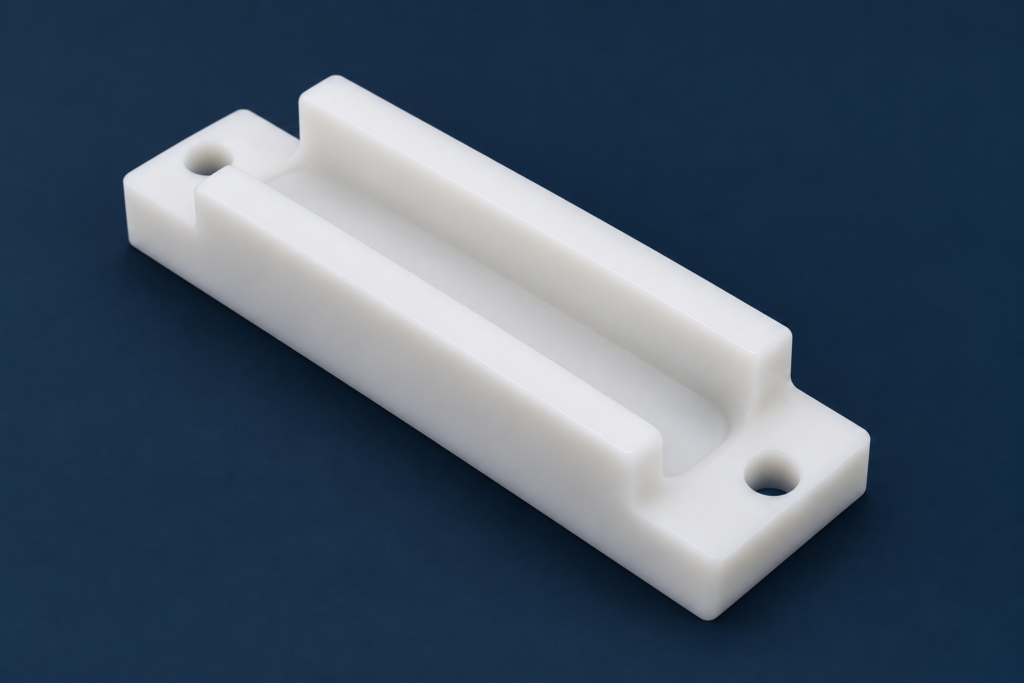
AI-generated illustration: a machined polymer guide block; no material validation or completed customer trial is represented.
Match the material to the manufacturing route
Start from the right stock form
Plate or block parts with pockets and multiple faces can be discussed through CNC milling. Shafts, sleeves and predominantly round fittings can be discussed through CNC turning. A component may require both processes.
5052-H32 sheet, 6063 extrusions and ADC12, A380 or Zamak 3 cast blanks start from different manufacturing routes; they are not interchangeable CNC stock grades.
For conductive or thermal parts, C11000 copper bar or plate can be assessed with the material condition, contact faces, flatness and plating specified.
Define the finished condition
Agree the material and finish together: anodized appearance for an aluminum housing, passivation requirements for a specified stainless part, or protection for a steel fixture. Heat treatment and specialist finishing are coordinated through the agreed supplier route.
Surface finishing options can be reviewed with the drawing. State the acceptance condition and protected areas; coating thickness alone is not a universal prediction of dimensional change.
Material documents and inspection deliverables are agreed with the quotation for the specified part, material and order.
Material selection questions
Send the drawing. Tell us what the part must do.
Start your inquiry with a drawing, CAD model or useful part description, the intended use, and quantity if known. If you have a specification, include the material and revision. Operating environment, critical fits, finish, required documents and delivery country or target date will help refine the quotation.
We will review the proposed material and manufacturing route with the quotation. If you are comparing options, identify the requirement that must stay fixed: load, movement, weight, contact, appearance or finished fit.