Small Batch CNC Machining
Get custom metal and engineering-plastic parts for your next equipment build, first production batch or planned repeat order. Great Machining supplies milled housings, brackets, plates, turned sleeves and plastic guides with agreed finishes, inspection records and batch identification.
In-house CNC machining and dimensional inspection, with specialist finishing coordinated through selected partners.
- First batches and scheduled repeats
- Controlled drawing revisions
- Inspection documents to the agreed scope
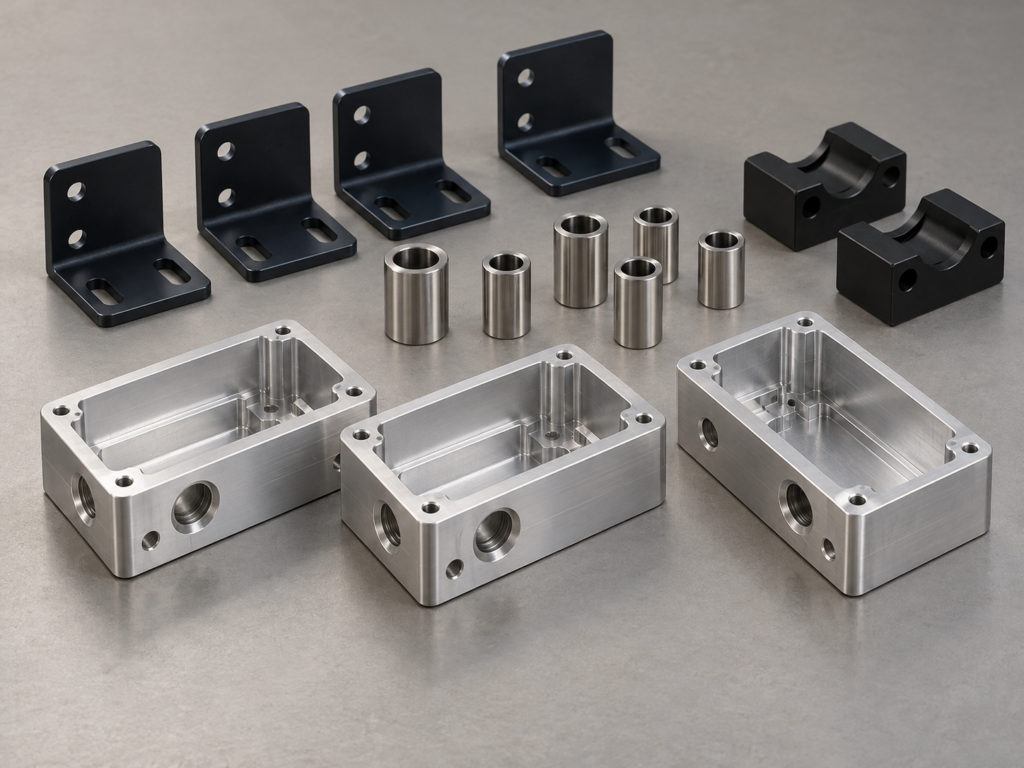
CNC Parts for Your Next Production Run
We supply small batch machined parts in the specified material and finished condition. These part families show the kinds of geometry and acceptance requirements we work with.
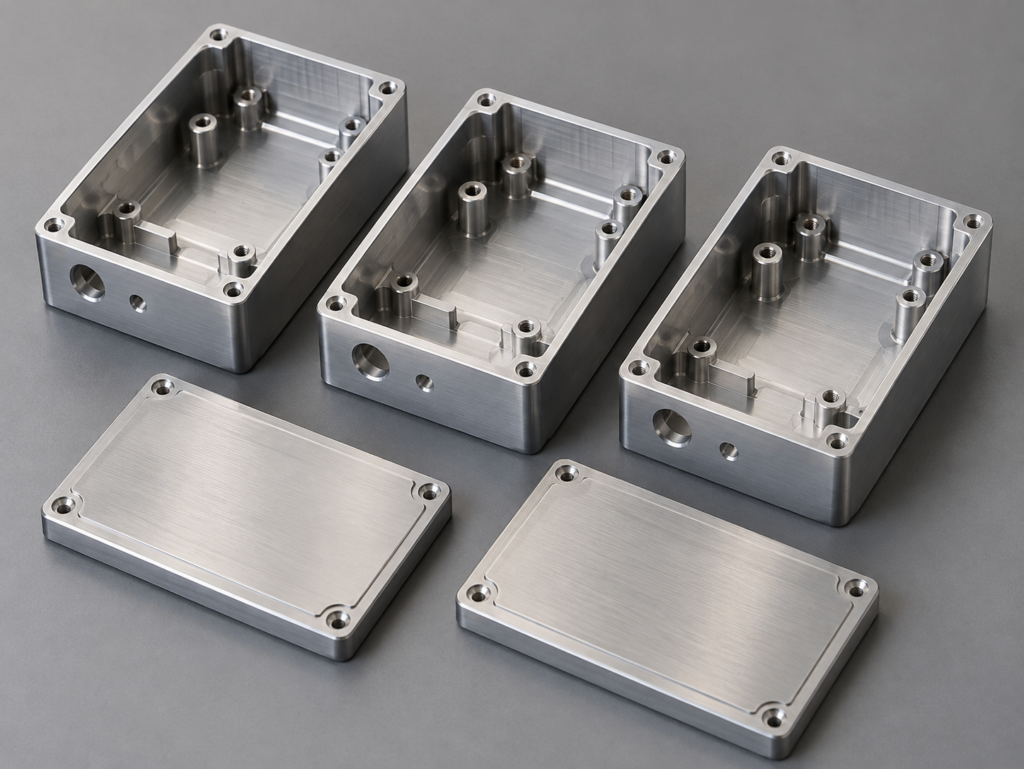
Instrument Housings and Covers
Machined pockets, locating bores, mounting faces and cover interfaces in specified aluminium stock. Define the cosmetic surfaces and the dimensions that must fit after anodizing, including any bores or contact areas to be masked.
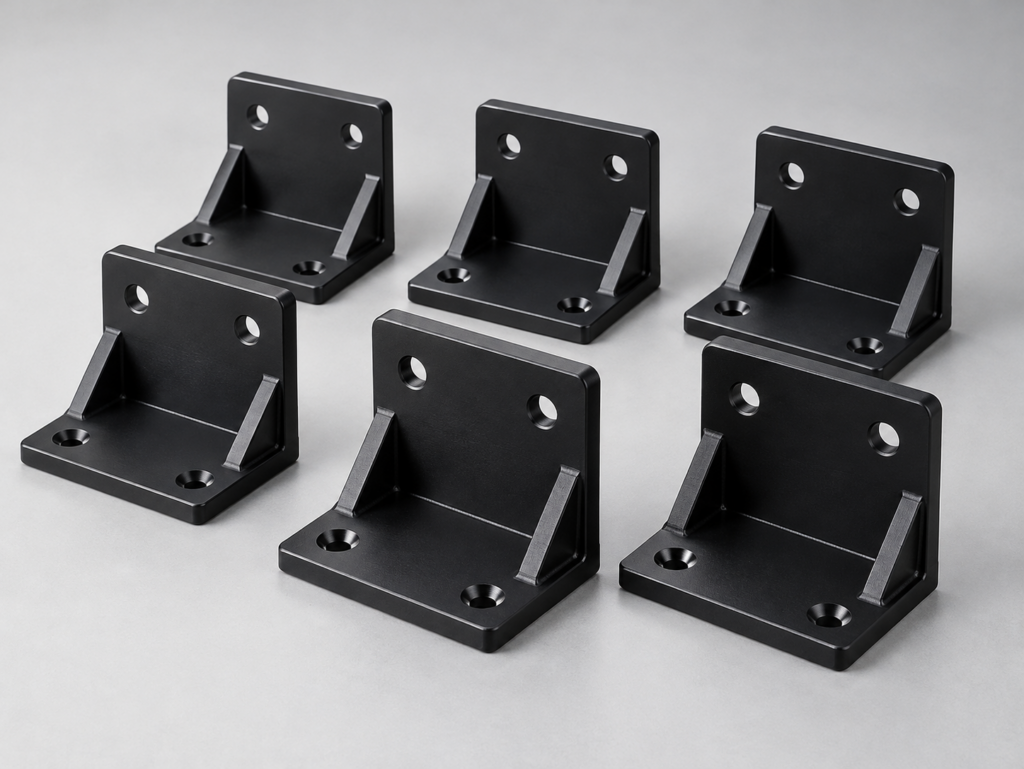
Mounting Brackets and Plates
Sensor mounts, installation brackets, positioning blocks and fixture plates for equipment assemblies. Keep the reference faces, hole positions and functional-face flatness with the drawing so the same interfaces can be checked in later batches.
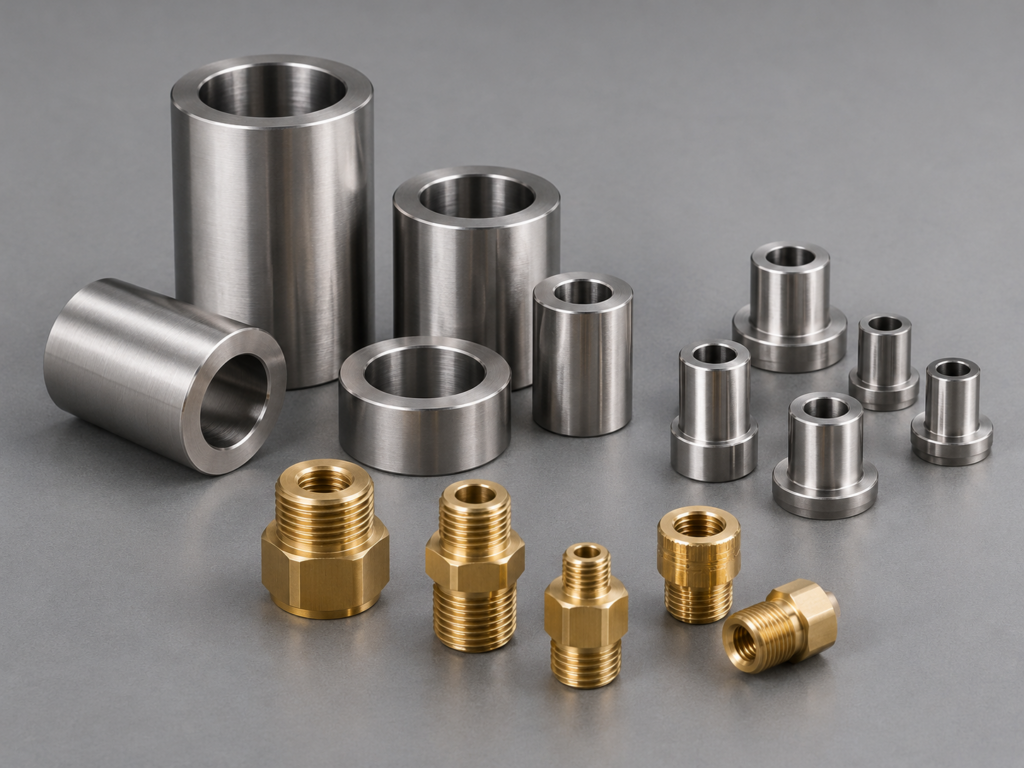
Turned Sleeves and Spacers
Shafts, sleeves, spacers and threaded connectors in the specified metal. Mating diameters, shoulders, thread requirements, surface finish and burr limits define what the delivered parts must satisfy.
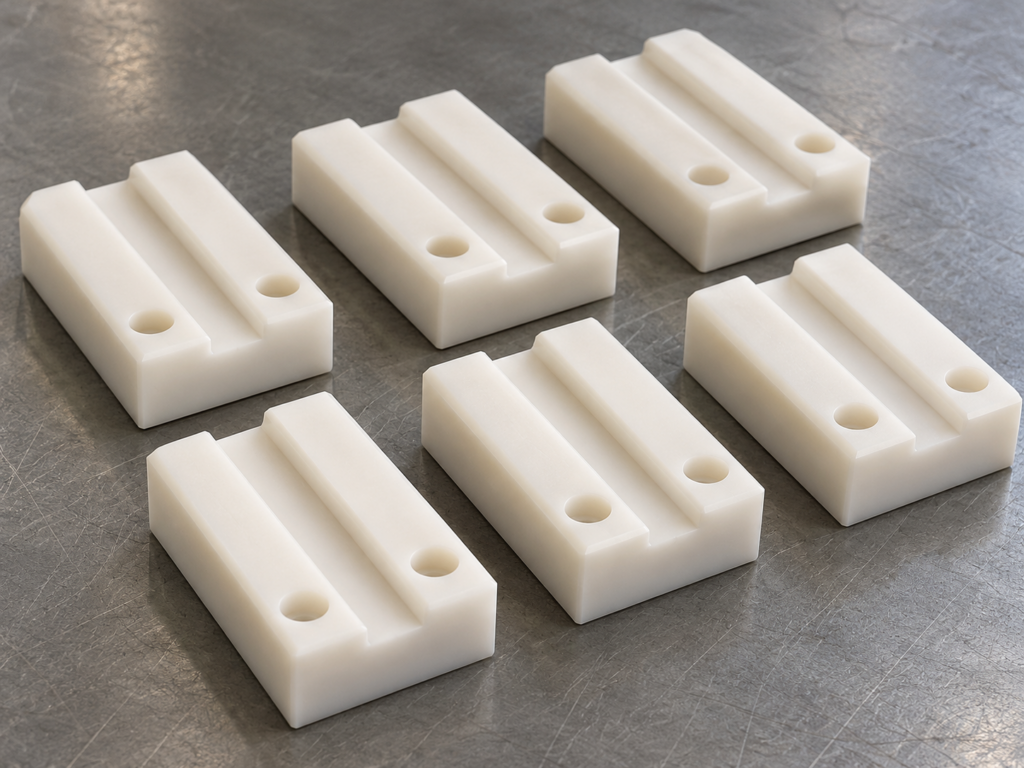
POM Guides and Locators
Guide blocks, locating pieces, slides and contact components machined from the specified POM-C or POM-H stock. State the actual material and measurement condition; residual stress, temperature and moisture can affect dimensions.
Project example: a 100-piece 316L sleeve batch combined specified fit diameters, passivation and final feature checks, completed in 15 manufacturing working days. The project details appear below.
Images on this page are representative part, machining, inspection and packing illustrations.
Choose How to Order the Batch
Low volume CNC machining can serve a first equipment build, a split delivery or an established repeat requirement. Choose the purchasing arrangement around the design status and the parts you need now.
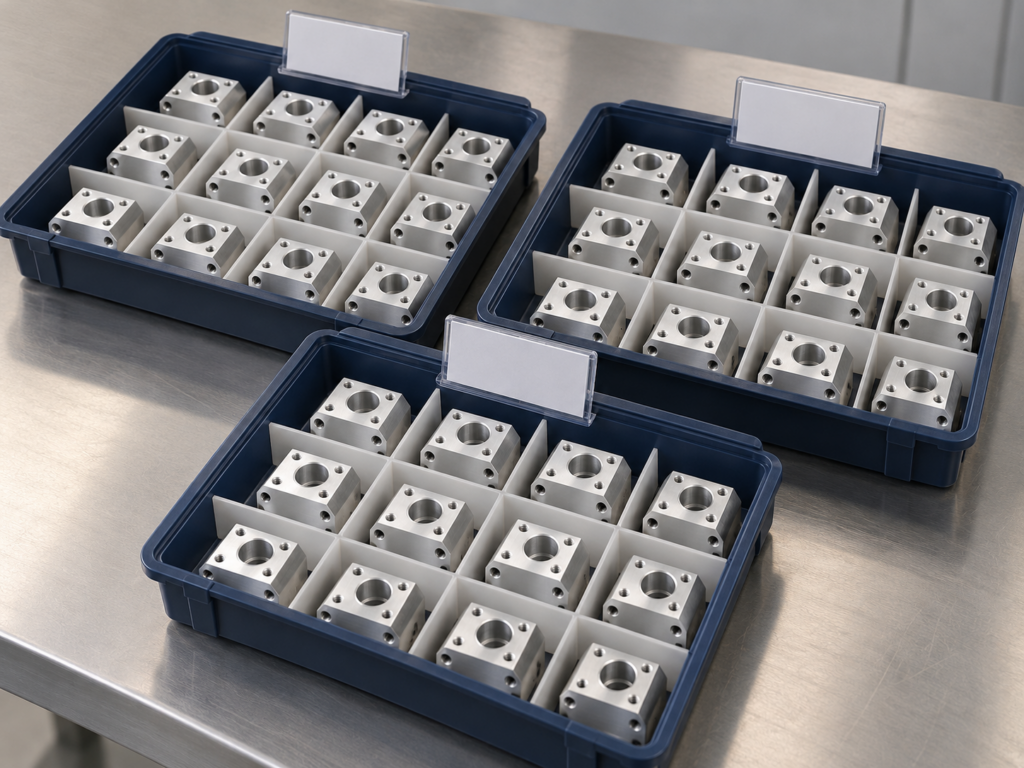
Our common CNC small-batch quantities are 20–500 pieces, with repeat orders of 100–5,000 pieces assessed against the part, machining hours and schedule. These ranges overlap; the quotation confirms the quantity and production arrangement for your project.
Compare Quantities Before Committing
Ask us to quote the quantity options you can use—for example, 10, 100, 500 or 1,000 pieces—against the same part revision, material, finish and inspection scope. That gives you a useful comparison of unit price, total order value and the stock you would hold.
Machining Routes for Your Part Geometry
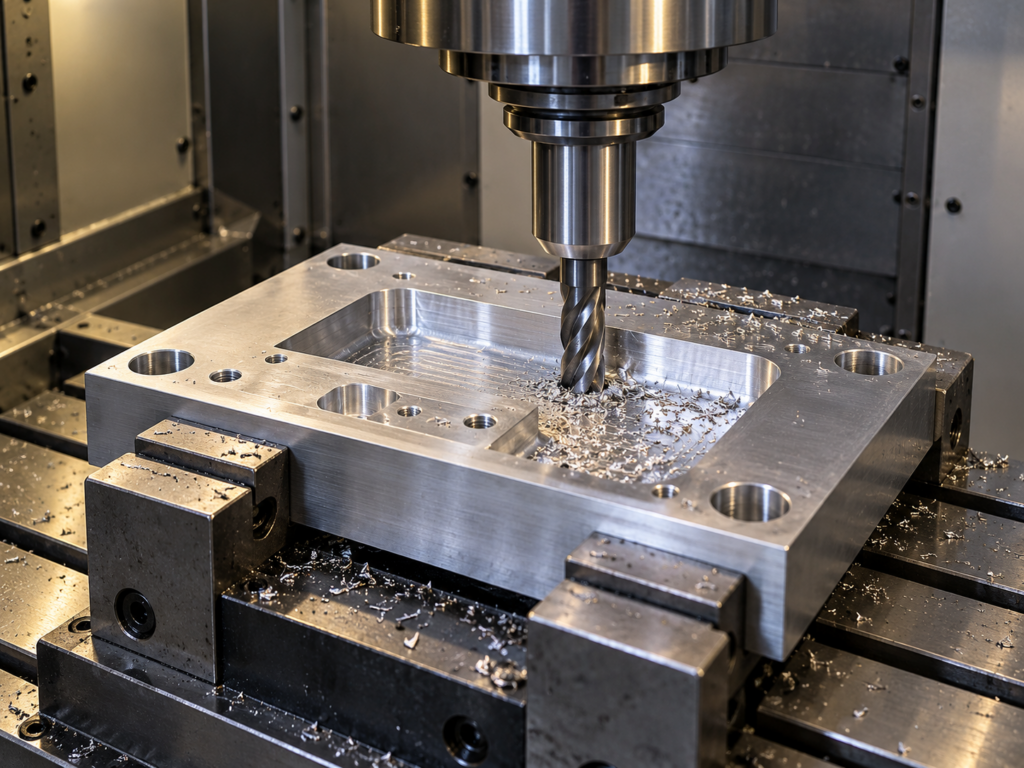
Milling for Housings, Plates and Brackets
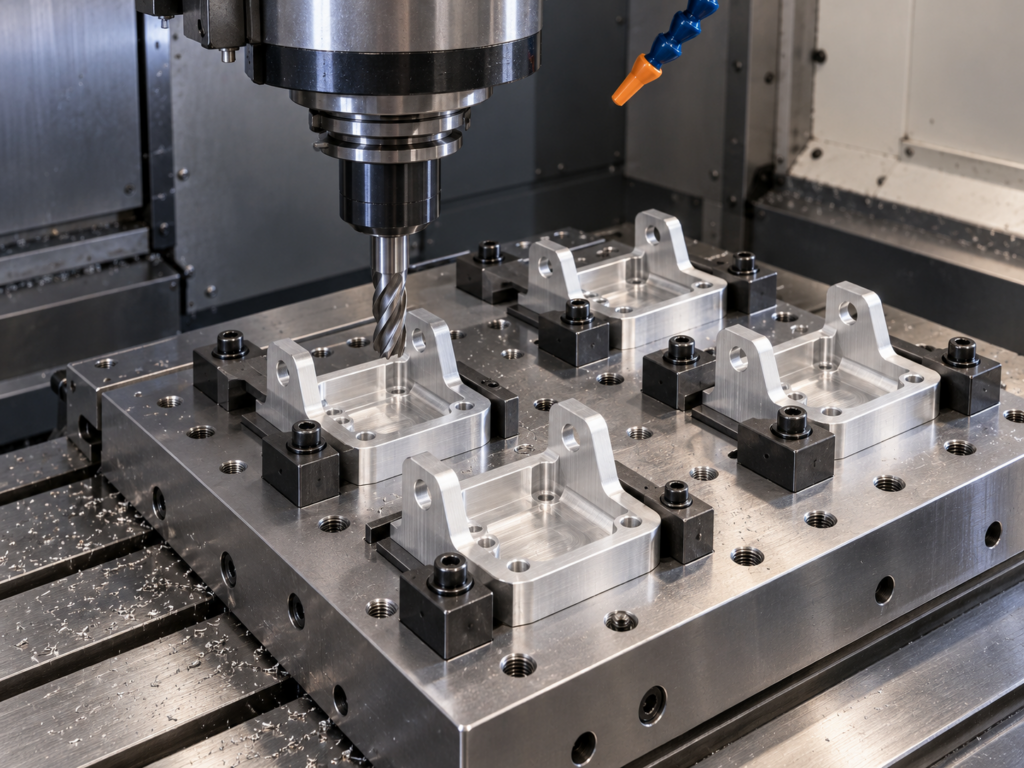
CNC milling produces accessible pockets, slots, mounting faces and hole patterns in plate, bar or block stock. The route depends on tool access, internal corners, clamping surfaces and the relationships between machined faces. Dedicated fixtures may be appropriate for a batch; their scope belongs in the quotation.
Explore CNC milling services for prismatic components.
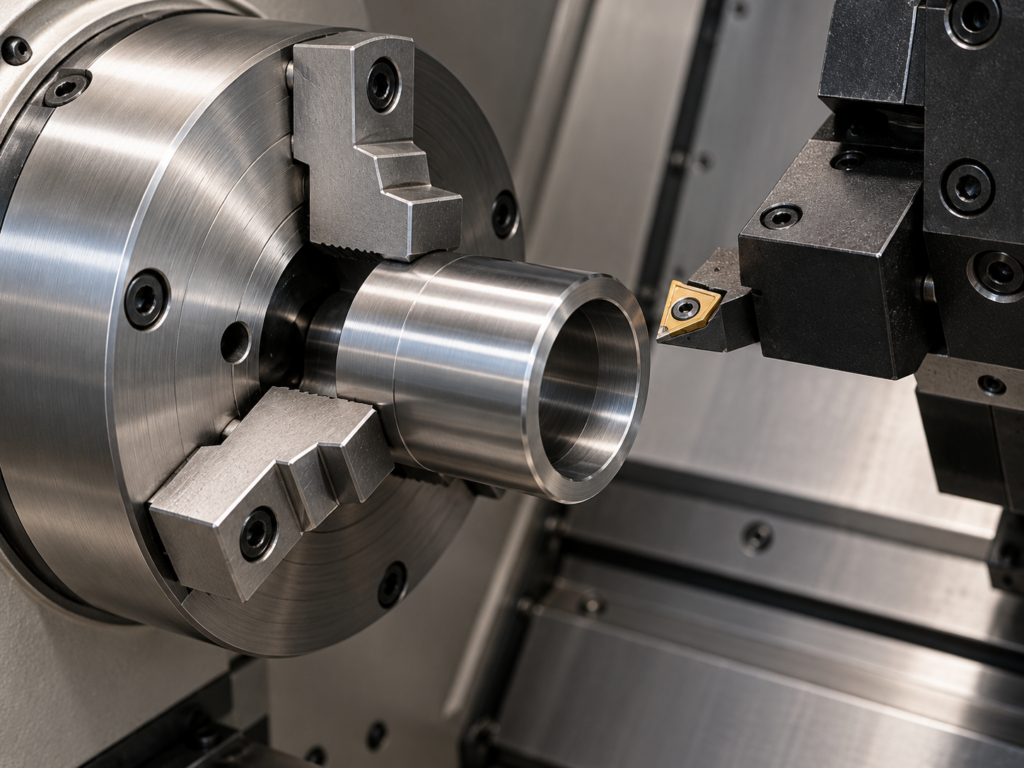
Turning for Shafts, Sleeves and Connectors
CNC turning produces rotational features such as outside and inside diameters, shoulders and threads. Flats, side holes or slots can require mill-turn work or an additional setup. Define which diameters and faces must relate, along with any support needed for a slender part.
Explore CNC turning services for rotational components.
For repeated profiles or suitable moulded-plastic designs, an alternative forming route may be worth comparing with stock machining. Tooling, material identity, quantity and final requirements govern that choice. Additional forming processes use selected production partners; they are assessed as a separate route. Our CNC machining services page covers the broader machining offer.
Specify the Material and Finished Interfaces
Keep the material standard, grade, condition and stock form with the order. A change of grade or form requires approval; a familiar family name alone does not define an equivalent replacement.
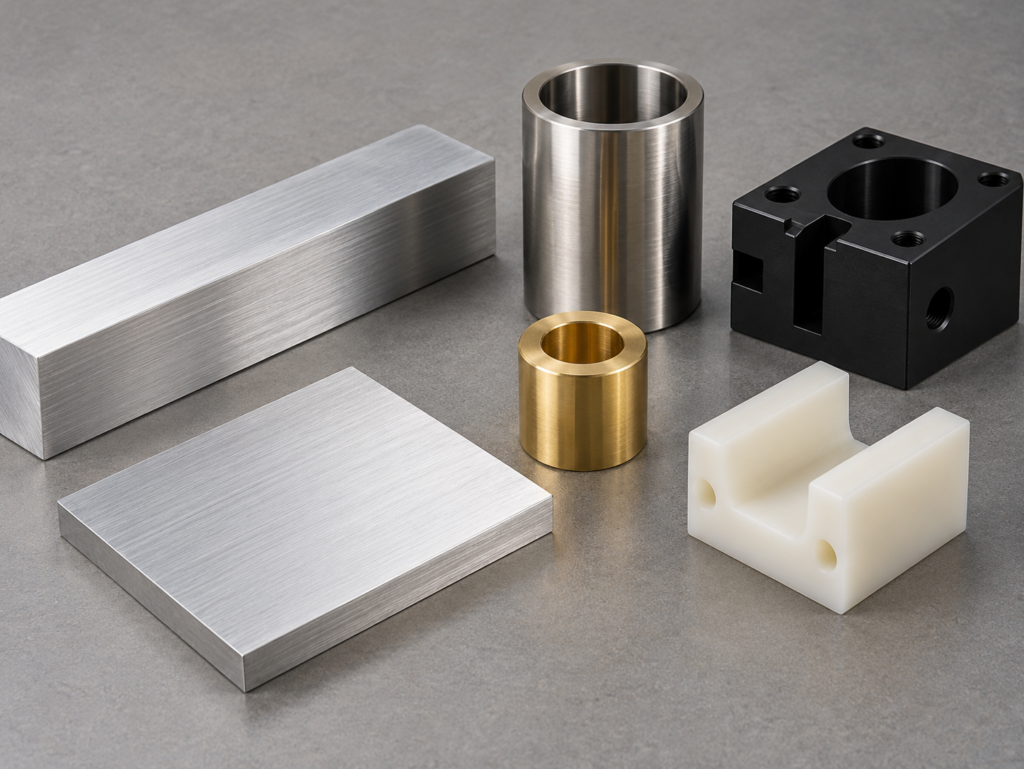
| Material and stock | Typical batch components | Finish and acceptance details |
|---|---|---|
| 6061-T6 aluminium plate or bar | Housings, brackets and adapters | As machined or agreed anodizing; identify cosmetic faces, masking and final-fit dimensions. |
| 6082-T6 aluminium plate or bar | Mounting plates, fixture blocks and supports | Confirm the specified grade/form and functional-face requirements; do not substitute for 6061-T6 without approval. |
| Specified 303, 304 or 316L stainless steel | Sleeves, shafts and connectors | 303 is mainly a bar-stock option; 304 and 316L may use bar or plate. Confirm the actual grade, environment and any passivation. |
| Specified 1018, 1045 or 4140 steel | Shafts, pins, supports and fixture parts | State the hardness condition, any heat treatment, protective finish and final dimensional checks. |
| C36000 brass bar | Turned spacers, connectors and threaded parts | Confirm the actual alloy, finish, application requirements and any required material declarations for the order. |
| Specified POM-C or POM-H stock | Guides, locators, slides and contact components | Define material identity and the measurement state, considering stress, moisture, temperature and support. |
Material availability and documents are confirmed for the order. Specialist anodizing, passivation, plating and heat treatment are coordinated through selected partners. Identify mating bores, threads, grounding or other functional areas that need masking, and whether dimensions are accepted before or after treatment. Coating thickness is not a universal conversion for the change in every dimension.
See Aluminium CNC machining for more detail on stock grades and finished interfaces.
Keep Each Batch to the Agreed Requirements
Repeatability starts with the controlled part requirements and suitable checks. We confirm the part number, revision, material, critical features, finish and required documents before the work is released. Incoming checks link available material documents and the material batch to the job, and check stock dimensions and appearance before machining.
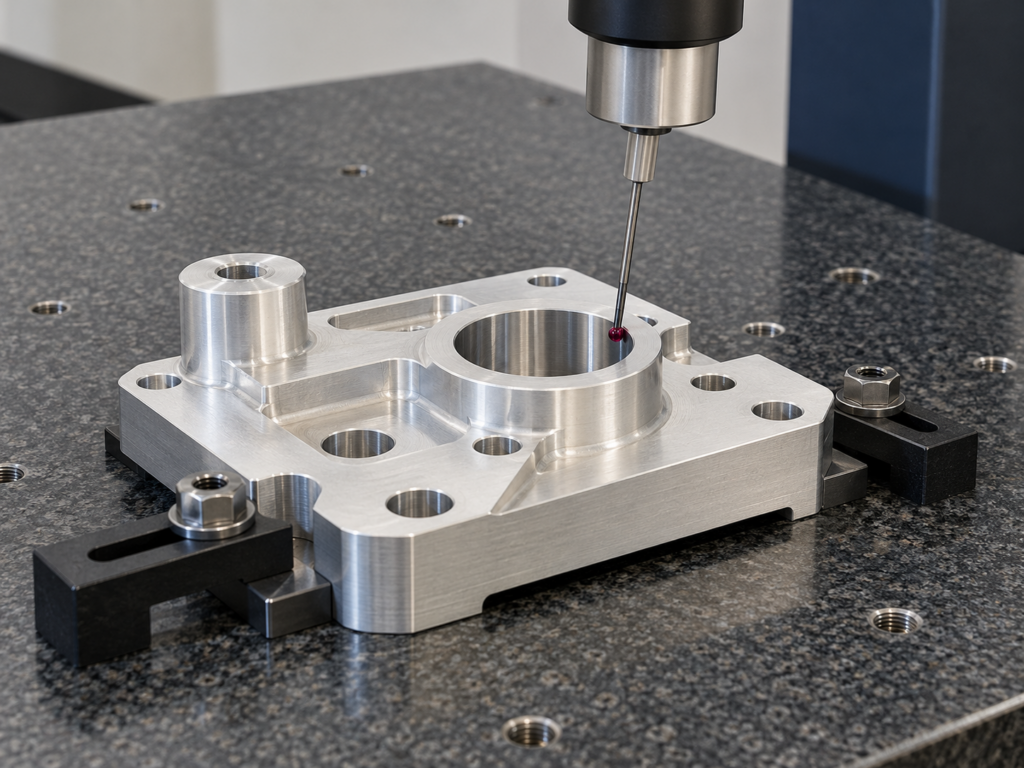
First-Piece and Process Checks
First-piece checks address the setup, program, fixture, datums and agreed critical features. In-process checks follow the inspection plan, including the effects of tools and operations. Parts returning from specialist finishing are checked against the applicable treatment and feature requirements before final release.
Measurement methods are selected for the requirement. Our resources include CMM and optical measurement, dimensional gauges and accessible-surface roughness measurement; the method, range, probe and measurement conditions must suit the feature being accepted.
Choose the Reporting Scope
| Deliverable | What to agree for the order |
|---|---|
| Critical-feature dimensional results | Identify the features and drawing revision to be reported, with the applicable inspection plan. |
| Full-dimensional inspection or individual-part reports | Specify the coverage, sampling or per-piece requirement and report format as a separately quoted scope. |
| Formal first article inspection | Agree the marked drawing, feature numbering, nominal values, tolerances, results and measurement methods. Routine production first-piece checks are a different deliverable. |
| Material, conformity and process records | Identify available material documents, the order-specific CoC and required special-process records. A CoC is not a third-party test certificate. |
Identified Parts and Packing
The packing list and part labels identify the part number, revision, quantity and applicable batch. Agree protection for functional or cosmetic faces, grouping of different part numbers and any assembly or packing requirements.
See Quality and inspection for the wider quality process.
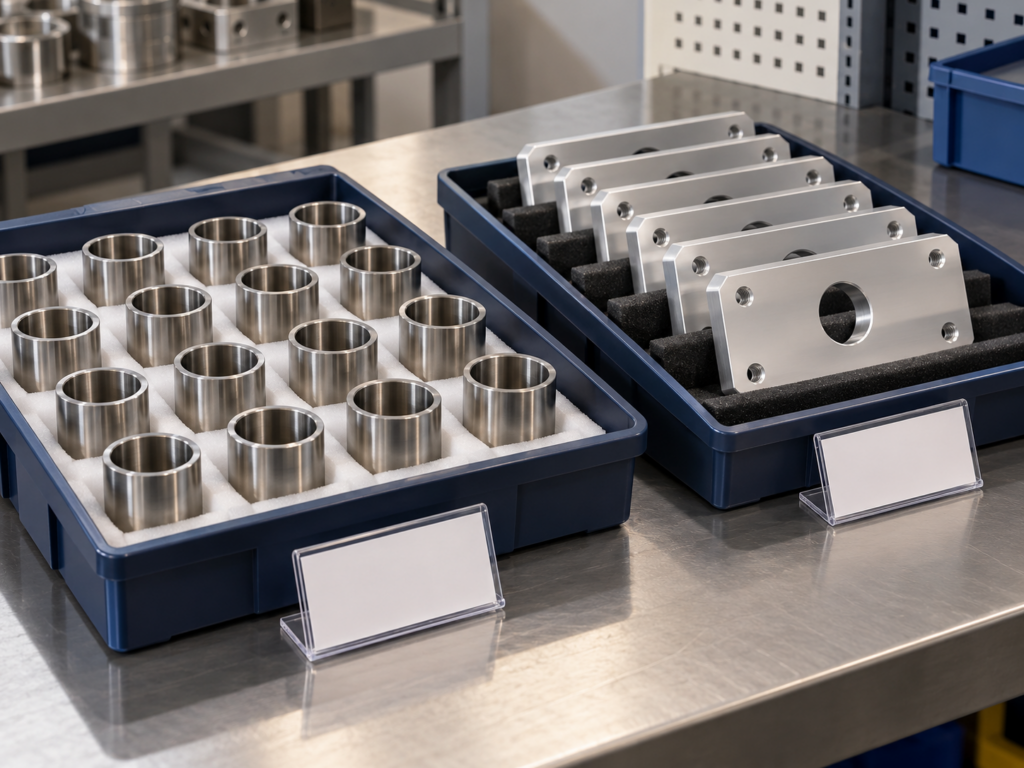
A 100-Piece 316L Sleeve Batch
An industrial automation OEM required 100 stainless steel sleeves, each with an 18 mm outside diameter, 10 mm bore and 45 mm length. The order specified 316L and controlled mating features.
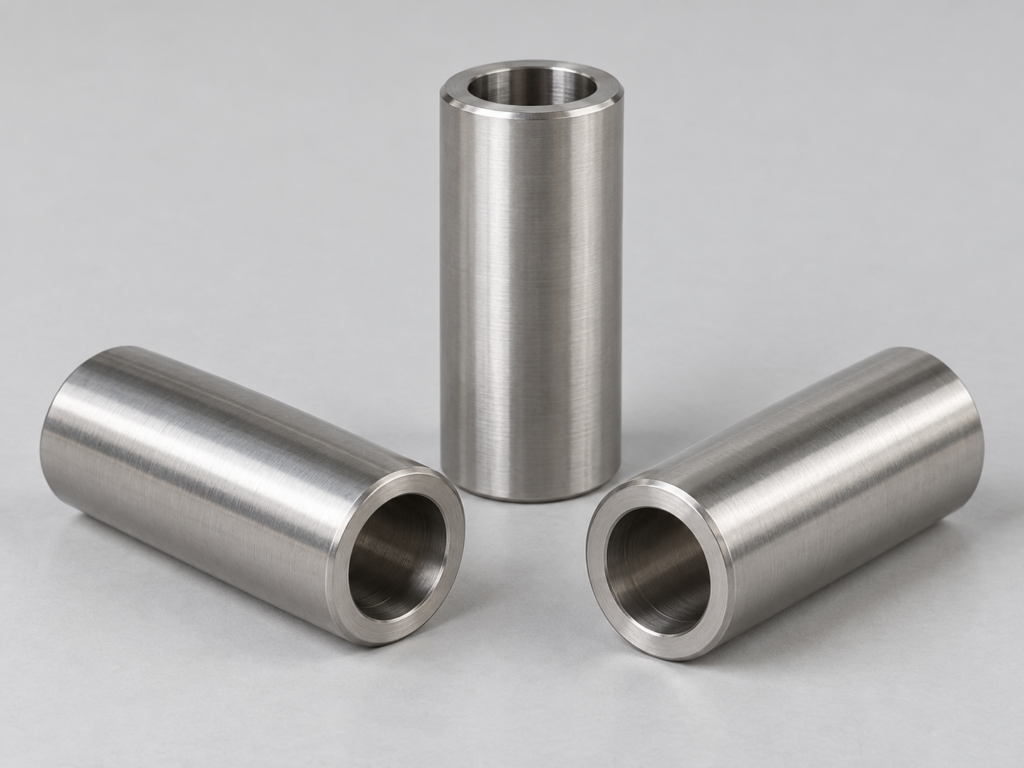
Representative geometry illustration of this sleeve type.
| Selected requirement | Project specification |
|---|---|
| Outside diameter | 18.000 ±0.010 mm |
| Inside diameter | 10.000–10.020 mm |
| Selected mating surfaces | Ra ≤0.8 μm |
The route combined turning and precision finishing of the mating surfaces, with controlled deburring. Agreed features were rechecked after passivation; fit diameters, length and surface requirements were recorded separately.
Machining and in-process inspection took 12 working days. Passivation and final inspection took a further 3 working days, giving 15 manufacturing working days for this order.
Plan Manufacturing and Delivery Separately
For repeat CNC batches, typical manufacturing time is 12–20 working days within the agreed quantity and machining-hour schedule. The clock starts once the approved technical requirements, order conditions, necessary payment and material availability are confirmed. The quotation sets the actual schedule for a first batch or repeat order.
Common specialist finishes can add 3–5 working days; special processes, additional material procurement or extra inspection work are scheduled for the project. Customer approvals, later revisions, transit and customs clearance have their own timing.
Give the required dispatch date or arrival target and delivery country. For split deliveries, include quantities and dates for each release so production, treatment, packing and shipping can be planned together.
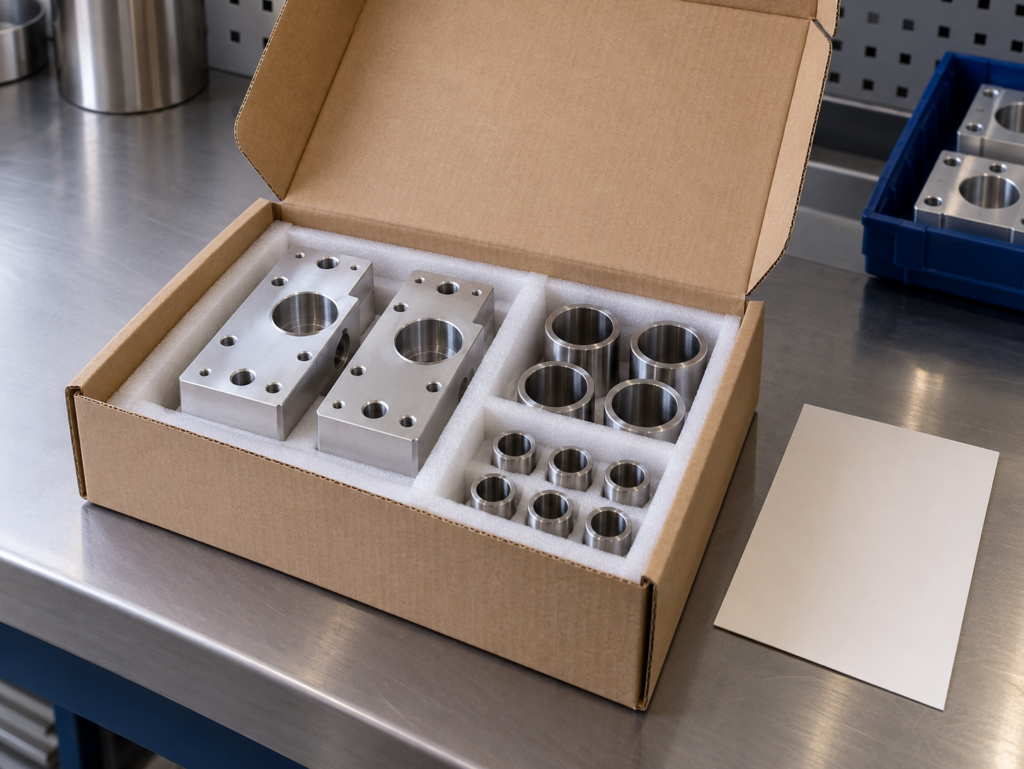
From Enquiry to an Identified Batch
1. Share the Parts and Quantities
Send drawings, CAD or a useful part description. Add the immediate quantity, alternative quantities to quote and any planned releases, keeping forecasts separate from the first order.
2. Confirm the Engineering Quotation
We clarify the material, route, quantity prices, fixtures, finishes, inspection documents and manufacturing schedule. The quotation also defines packing and freight inclusions. Drawing or model discrepancies are resolved before manufacture.
3. Approve and Manufacture
Confirm the controlled requirements and any customer first-piece approval. Production follows the agreed machining and finishing route, with the inspection work set for the order.
4. Inspect, Identify and Dispatch
Final verification, labels, packing and documents follow the agreed scope. Confirm the requirements again for a later release or repeat order, identifying any changes before the next run.
Small-Batch Purchasing Questions
Request Your Small-Batch CNC Quote
Your name, work email and a useful description of the parts are enough to begin. If known, add the quantity needed now and the next production stage.
Helpful details for quotation:
- Part numbers, current CAD models and drawing revisions.
- Quantities to compare, release dates and forecast demand listed separately.
- Material grade, condition, finish, critical features and inspection documents.
- Packing requirements, delivery country and the target dispatch or arrival date.
Upload non-confidential PDF drawings directly, or place CAD files such as STEP in a ZIP archive, up to 5 MB per file.
For restricted drawings, Discuss an NDA and file transfer before sharing the files.