Stainless Steel Machining for Custom Equipment Parts
Custom sleeves, mounts and connectors for equipment prototypes, small batches and repeat orders. Great Machining combines in-house CNC milling, turning and dimensional inspection with specialist finishing to supply parts made to your drawing.
Specified grades. Functional fits. Agreed inspection records.
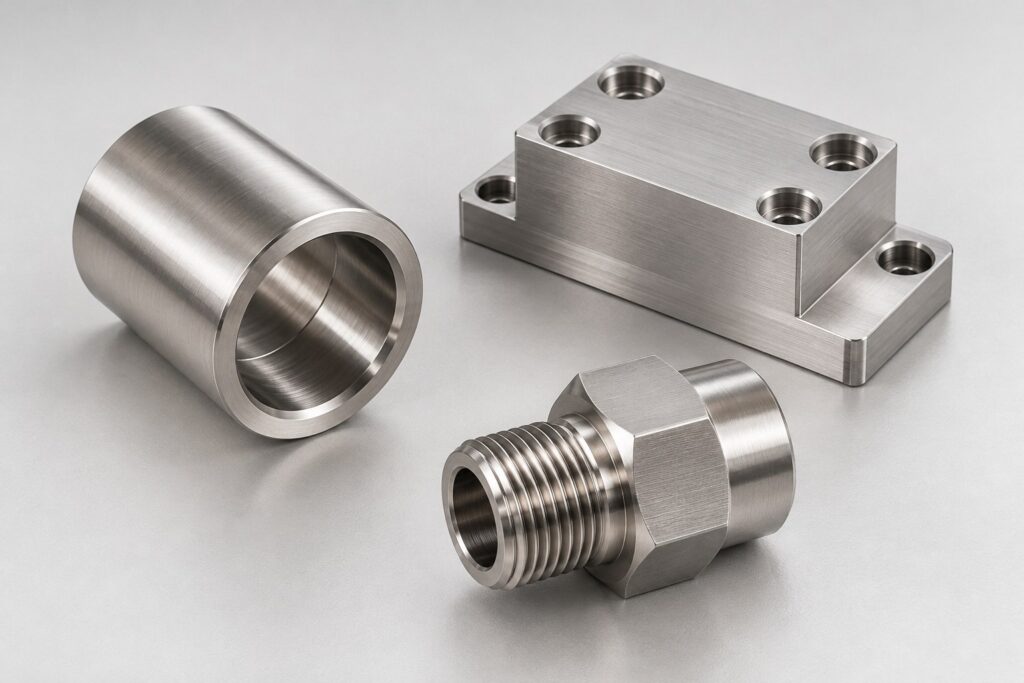
Stainless steel part geometries — illustrations.
Stainless Steel Parts for Your Equipment
We manufacture components for automation, instruments and industrial equipment, from a single prototype to planned repeat orders.
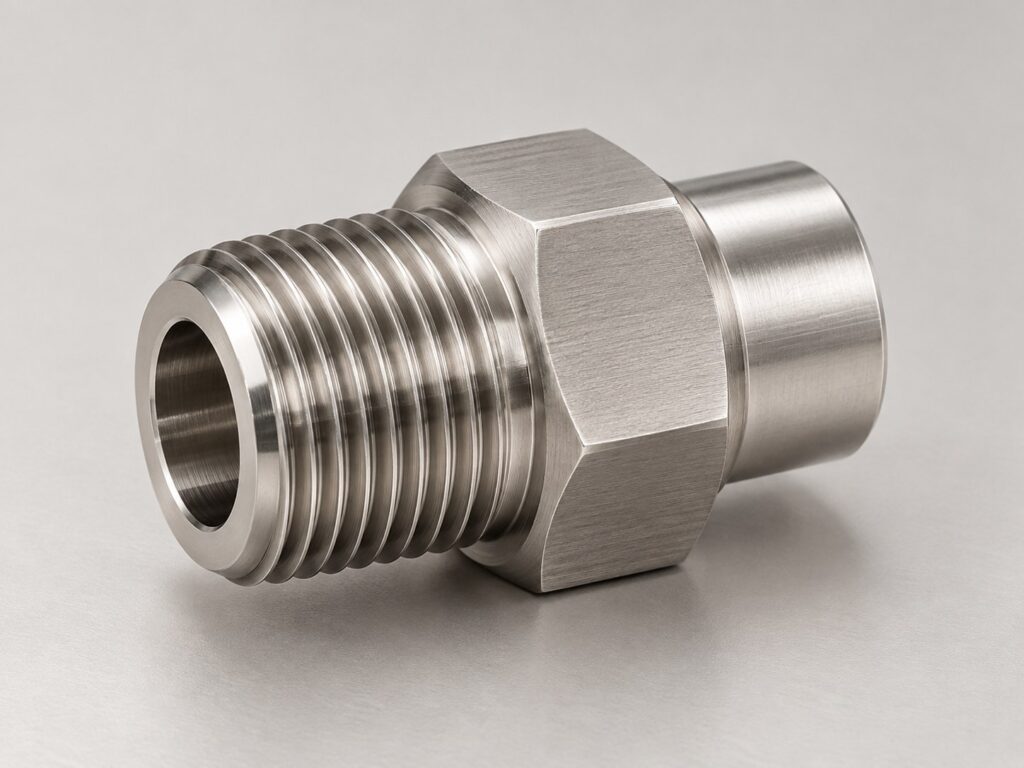
Threaded Connectors
Adapters with threads, shoulders, flats and cross-holes. Combined turning and milling produces transverse features; thread form, tolerance class and engagement length follow the drawing.
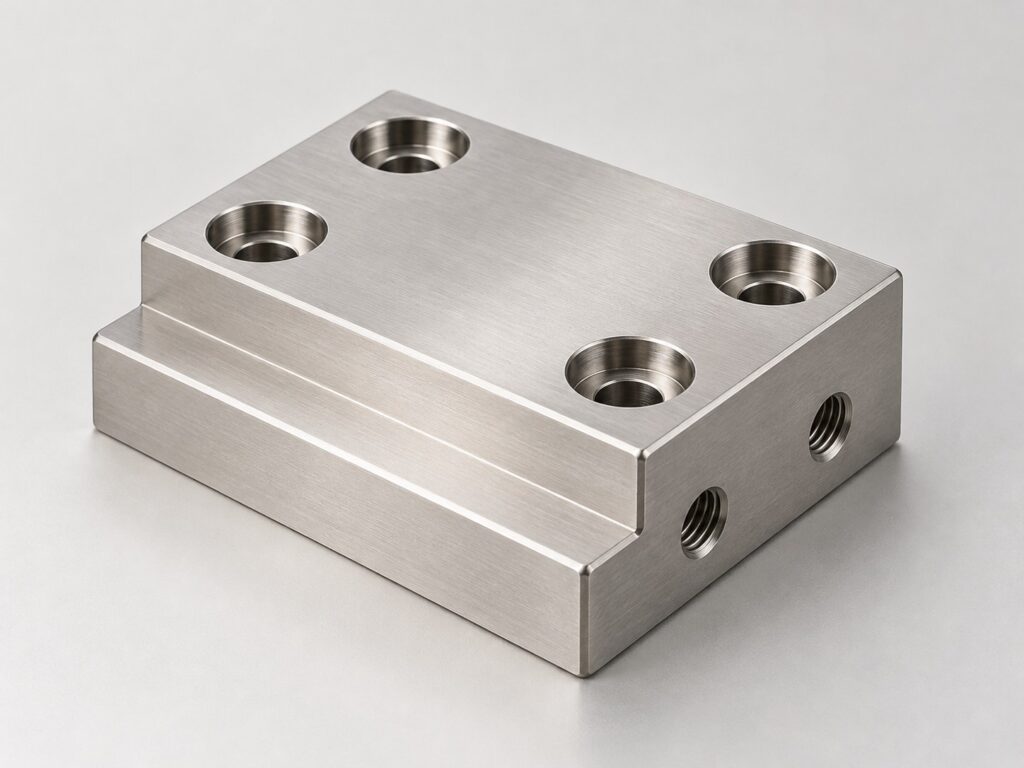
Component geometry illustrations.
Stainless Steel Grades and Material Conditions
We source stock to the agreed grade, material specification and supplied condition. The drawing takes priority; a material change requires approval before production.
| Grade | Stock and part fit | Selection boundary |
|---|---|---|
| 303 | Free-machining bar for turned sleeves, connectors and threaded parts. | Use only when specified or approved, with suitable service environment and joining requirements. Easier cutting does not authorize substitution. |
| 304 | Bar or plate for general equipment mounts, brackets and instrument parts. | Match the material standard, supplied condition and joining requirements. A 304 callout does not automatically permit 304L. |
| 316L | Bar or plate for more demanding corrosion requirements, including chloride-bearing service. | Suitability depends on medium, concentration, temperature, crevices and surface condition. Agree passivation and material documents for the order. |
Drawing specifies 316? Send that exact requirement. We source against the requested specification and documents; 316L is not an automatic substitute.
Higher-strength stainless parts: 17-4PH is a separate option with a specified heat-treatment condition, processing sequence and final dimensional checks.
Machining Functional Features in Stainless Steel
Work hardening, chip formation and tool wear affect stainless surfaces and burrs. Our machining and inspection plan focuses control on the features that locate, connect and fit your assembly.
316L Sleeve: Fits, Finish and Final Checks
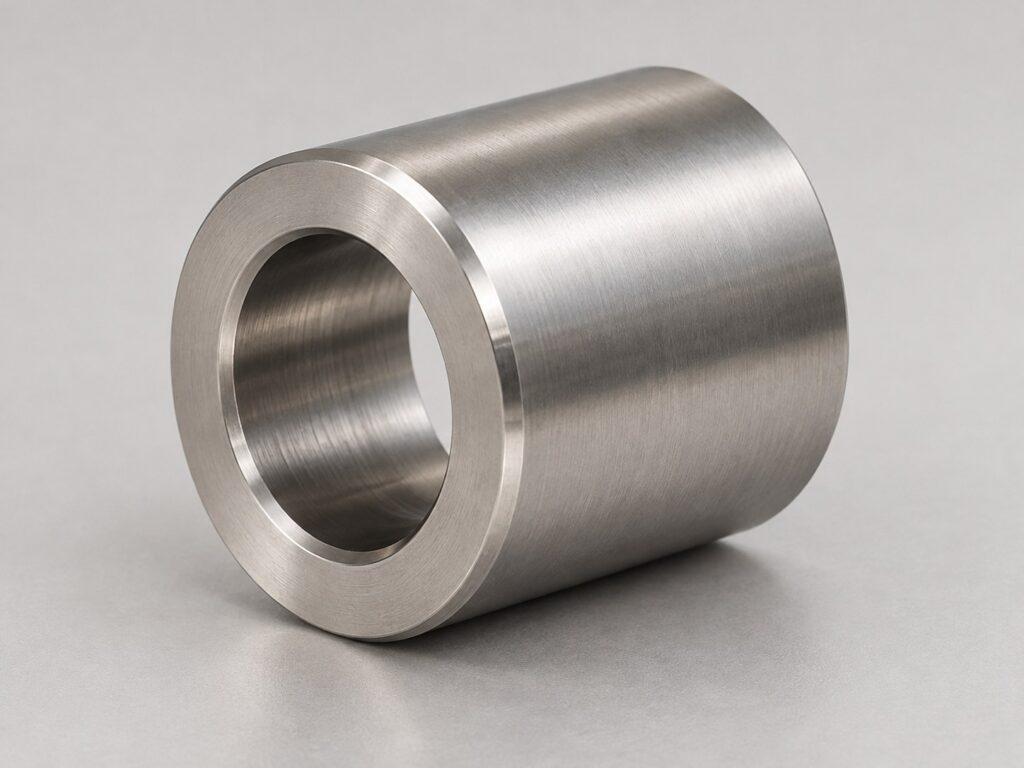
For an automation OEM, we machined a 100-piece batch of 316L sleeves: nominal outside diameter 18 mm, nominal bore 10 mm and length 45 mm. The project kept three acceptance requirements separate.
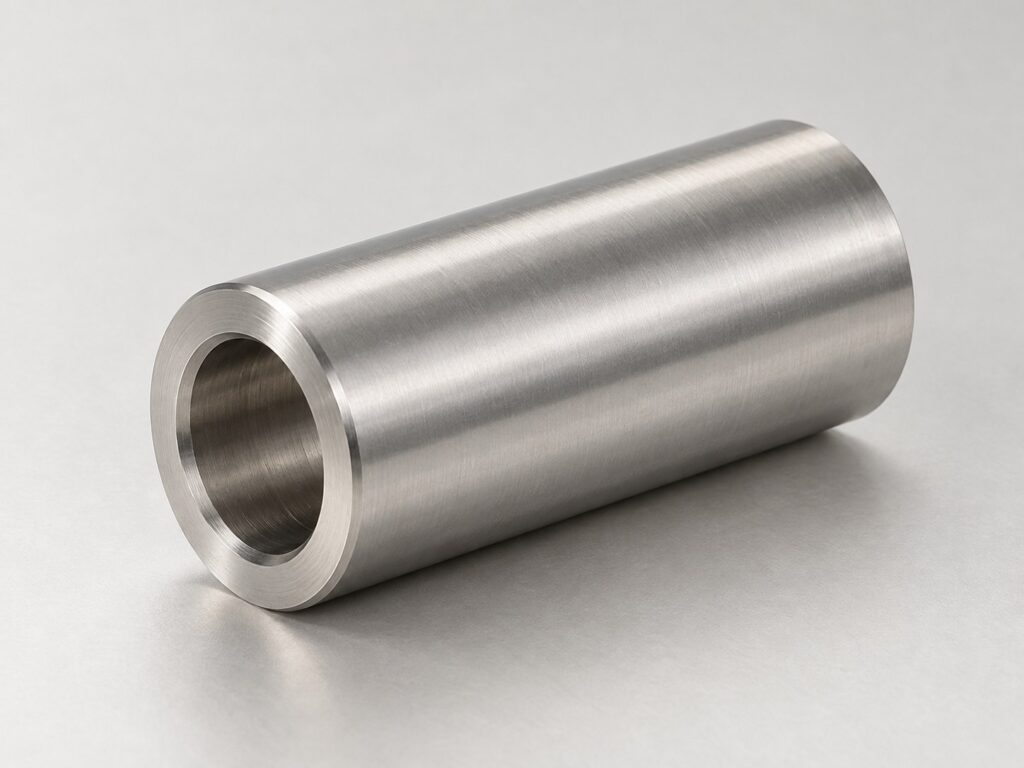
The route combined turning, finishing of the fitting surfaces and controlled deburring. Post-passivation checks recorded the agreed features, with the drawing revision and material lot linked to the order.
Sleeve geometry illustration.
Have a similar fit to manufacture? Start with a drawing, CAD file, sample or useful part description, plus quantity or project stage when known.
Surface Finishing and Passivation
We supply machined and deburred parts and coordinate specialist treatments through selected finishing partners. Choose the finish for the part’s functional and appearance requirements.
As Machined and Deburred
For functional components where machining marks are acceptable. Critical roughness, chamfers and edge breaks follow the drawing.
Bead Texture or Mechanical Polish
For appearance surfaces or a defined surface condition. Agree texture, polishing direction and protected functional faces; appearance and measured roughness are separate requirements.
Passivation
For applicable parts requiring a specified cleaning and passivation process. The order defines the treatment, appearance criteria and process documents. Passivation does not replace dimensional finishing or cosmetic polishing.
What Drives Stainless Steel Machining Cost
Compare quantity and machining options while keeping the approved drawing grade fixed.
Setup and quantity: Programming and workholding costs are spread across the batch. Repeat pricing also depends on the approved revision and production schedule.
Geometry and stock removal: Deep pockets, difficult access, slender features and extra setups can add machining time or tooling needs.
Acceptance and finishing: Functional tolerances, burr control, specialist finishes and inspection documents contribute to the quoted scope.
Request a Quote for Your Stainless Steel Parts
Start with a drawing, CAD file, sample or useful part description, plus quantity or project stage when known. STEP and PDF files are helpful; an early inquiry can begin before the grade or drawing is finalized.
Helpful for quotation, when available:
- Drawing revision, exact grade, material standard and condition, or operating environment if the material is open.
- Quantity tiers, critical dimensions, fits, tolerances, threads, edges and surface finish or passivation.
- Material and inspection documents, delivery country and requested date.
Send what you have; we will clarify the details needed for a quotation.
01 — Share Your Part
Send your available files or describe the component and intended use.
02 — Receive an Engineering Quotation
We quote material, machining, finishing, inspection and delivery after technical clarification. You approve the requirements before production.
03 — Manufacture, Inspect and Dispatch
We coordinate machining and specialist processes, complete the agreed checks and dispatch the parts with specified labels and documents.