Material traceability for CNC parts
Great Machining supplies CNC-machined parts with available source material documents and batch identification agreed for your order. Connect the material requirements on your drawing with the records your receiving team needs for prototypes, small batches and repeat supply.
Tell us the required document type before material purchasing, so availability and any additional inspection can be included in the quotation.
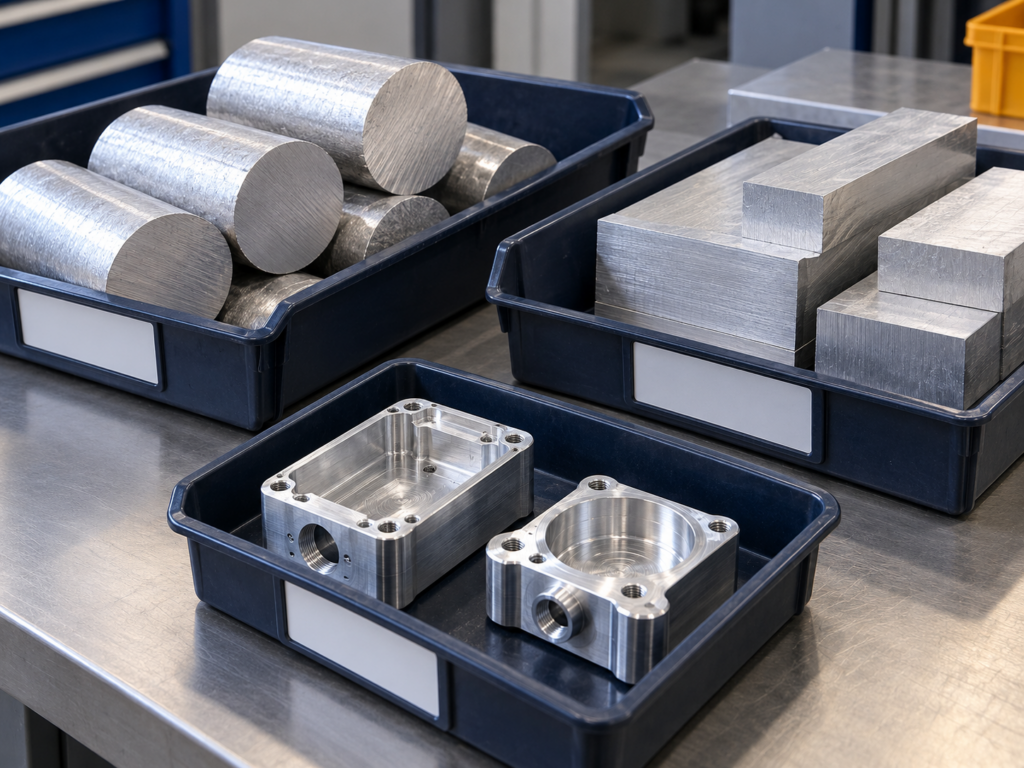
AI illustration: separate material lots before machining.
Material documents that answer different questions
A material certificate describes the material it covers; it does not replace the inspection of the finished part. Choose the records according to what your team needs to accept.
Source material document
Issued by the material producer or passed through the supplying stockholder, this identifies the material and the inspection information stated in that document. Request the grade, condition, product specification and required document type together. We provide available source material documentation within the agreed supply scope.
Part certificate of conformance
A Great Machining CoC can be included for the agreed part number and order requirements. It is our conformity statement for that scope. It is a different document from the original material producer’s certificate or an independent laboratory report.
Inspection and process records
Dimensional reports address the measured part features. Heat treatment or finishing records address the specified process. These can accompany an order as agreed; select them separately from material documentation. For dimensional inspection and reporting, see quality control and inspection.
Follow the identities from material to shipment
Our incoming material checks record the supply source, material documents and batch identity. Packing lists and part labels identify the part number, revision, quantity and applicable batch. For a specified traceability requirement, agree how the following records will connect.
01 — Source material
Start with the supplying source and document reference. Retain the material grade, condition and the heat or lot identifier stated on the source record.
02 — Incoming batch
Relate the received stock to that source record. Cutting stock into blanks or retaining a remnant creates another point where identification must be maintained.
03 — Machining order
Connect the issued material to the work order, part number and controlled drawing revision. A purchase order number alone may not distinguish material from different heats or lots.
04 — Additional processes
Where finishing or heat treatment is specified, agree how the process batch and returned parts remain associated with the machining order and required process records.
05 — Labelled shipment
Connect the delivered quantity and applicable batch on the packing list or part label to the agreed supporting records. Define how split deliveries or multiple material batches should be identified.
Batch records or individual part identification?
Agree whether the required traceability is by material batch or by individually identified part. If each part needs a serial number or permanent mark, specify its location, method and legibility before manufacture. A batch label alone does not establish individual serial traceability.
Specify the EN 10204 document type
For metallic products, EN 10204 describes inspection document types used with the order and the applicable product specification. The type identifies the inspection information and validation responsibilities; it does not specify an alloy or temper.
2.1 — Order compliance statement
The producer declares compliance with the order. Test results are not included.
2.2 — Test report
The producer declares compliance and includes non-specific inspection results. This is distinct from the specific inspection used for types 3.1 and 3.2.
3.1 — Inspection certificate
Confirms conformity with the order and includes specific inspection results. The producer authorizes an inspection representative to validate it; that representative must be independent of production.
3.2 — Inspection certificate
Confirms conformity with the order and includes specific inspection results. Two parties validate it together: the producer’s inspection representative, independent of production, and either the buyer’s authorized inspection representative or an inspector appointed under official regulations.
Source: Dillinger’s guide to EN 10204 inspection documents. Document availability depends on the material supply route and agreed order. The covered material and inspection unit determine which products the results represent; a 3.1 certificate does not itself mean independent third-party testing of every finished part.
Check the material record and its link to your parts
Use the following fields to discuss a material certificate for CNC machining. The applicable document and order requirements determine which results and identifiers should be present.
Read the source document
Check the issuer and document reference; the required product specification, material grade, delivery condition and product form; and the heat, lot or other covered inspection identity. Where test results are included, compare the required results with the applicable order or product limits, keeping the units and test conditions together. Check who validated the document.
Match the delivered batch
Check that the incoming material reference can be related to the ordered part, drawing revision, applicable batch and delivered quantity. For split stock, multiple heats or separate shipments, ask how each group is distinguished. An unrelated certificate with the same alloy name does not establish that link.
For alloy and machining choices, explore aluminum CNC machining.
Keep later processes and exceptions visible
A source material certificate covers the material and results identified in it. Later heat treatment, anodizing or plating needs the applicable process documentation when required; finished dimensions need the agreed dimensional inspection record.
We coordinate specialist finishing and testing with selected partners to the project specification. State any restrictions on manufacturing location, subcontracting or document issuer when requesting a quote.
If a material mark, batch reference or document does not match, identify the affected quantity and request the underlying records before accepting the traceability claim. Additional composition testing may answer a chemistry question, but it cannot recreate a missing historical link to a particular heat.
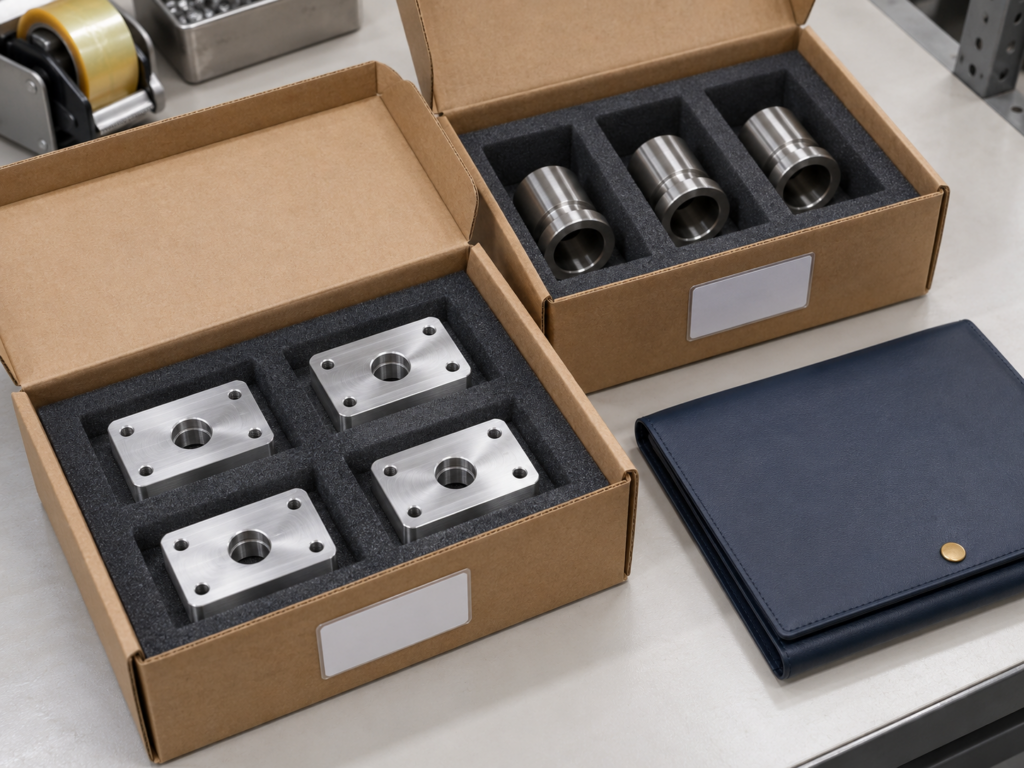
AI illustration: separate part groups and shipment labels.
Agree the document package before material sourcing
Start with a drawing, CAD file or useful part description and the intended use. We can discuss the material supply route, available documents and inspection deliverables within your quotation. Send the details you have; an early enquiry does not need a complete quality specification.
Helpful details include the material grade and condition, drawing revision, quantity, required document type, batch or serial identification, marking restrictions and any heat treatment or finish. Mention a required report language, file format or record-retention period so it can be assessed with the order.